
Turf, Wood Chips, or Rubber Mulch? Seattle Playground Safety
Comparing playground surfacing options on safety, maintenance, accessibility, and cost — and why turf wins in a rainy climate.
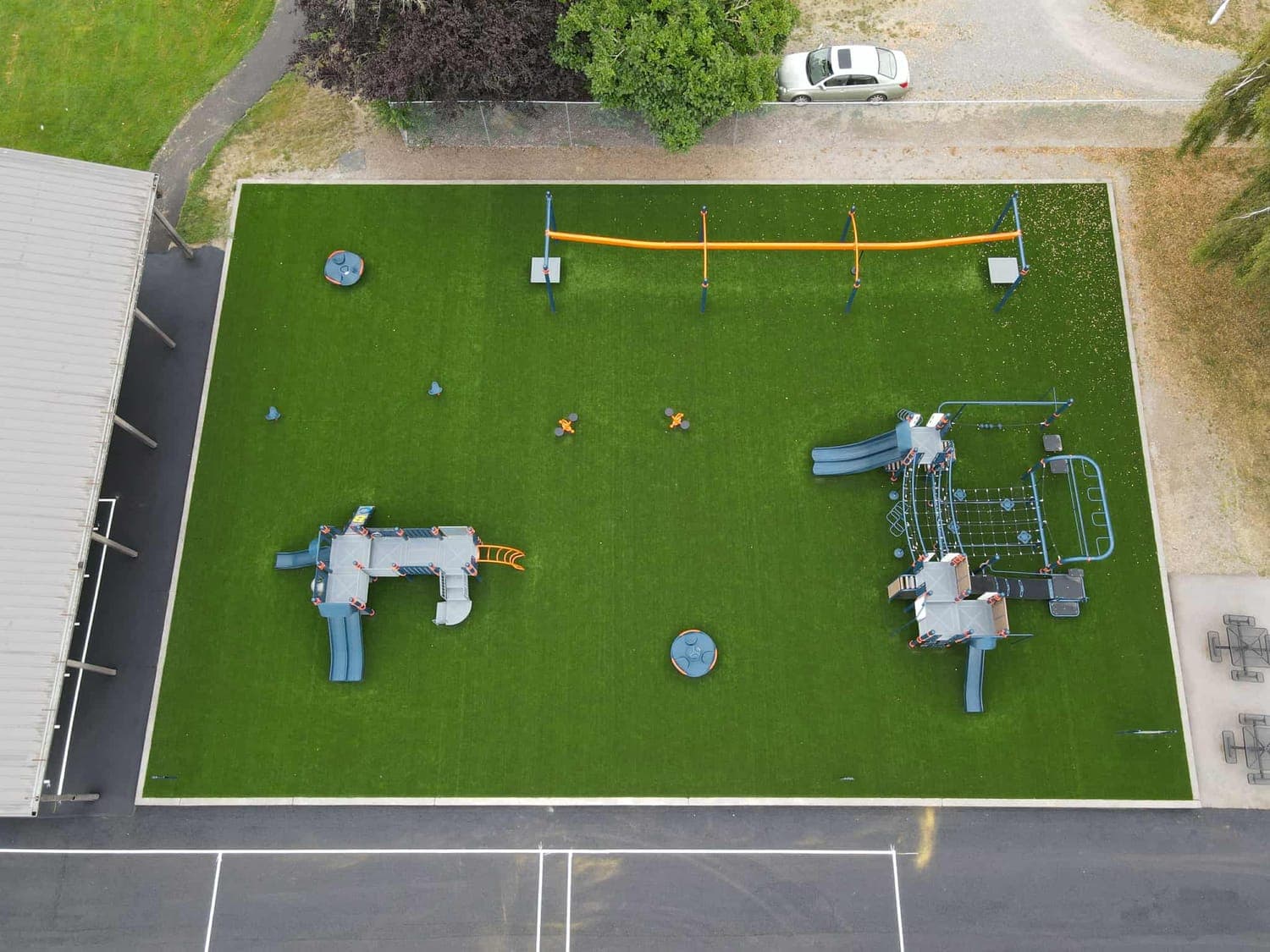
Choosing the Right Surface for Your Seattle Playground
When comparing playground turf vs wood chips vs rubber mulch, it helps to look beyond first costs and think about year‑round use, safety, and long‑term upkeep. In the Seattle and Puget Sound area, our wet winters, shade, moss, and heavy foot traffic can quickly change how each surface performs. Below is a clear look at the strengths and tradeoffs so you can make the best choice for a school, daycare, HOA, or backyard play space.
The Options Compared
Each playground surface has its own feel and performance. Here’s a quick side‑by‑side overview:
| Surface Type | Pros | Cons |
|---|---|---|
| Artificial Playground Turf | Consistent surface, good drainage, stays usable in wet weather, stable for mobility devices, low mess | Higher upfront investment, requires professional installation |
| Wood Chips / Engineered Wood Fiber | Lower initial cost, natural look, easy to top off | Becomes soggy or compacted in rain, migration/displacement, can turn to mud, regular refills needed |
| Rubber Mulch | Good impact absorption, drains better than wood chips, lower maintenance than wood | Can scatter, may hold heat in sunny areas, can require edging, appearance varies |
Fall Safety and Impact Attenuation
A safe playground surface should help reduce injury from falls. Most commercial play areas follow nationally recognized impact‑attenuation standards, and different materials meet these standards in different ways.
- Playground turf systems: These typically use a cushioning pad beneath the turf. The pad is engineered and tested to meet common fall‑height requirements when installed correctly. The cushioning doesn’t shift with rain or foot traffic, so the level of protection stays more consistent over time.
- Wood chips or engineered wood fiber: When freshly installed and at the right depth, wood chips can meet fall‑height guidelines. The challenge in Seattle is that constant moisture causes compaction or decomposition. Chips can get kicked away from high‑traffic zones, which may reduce their protective depth.
- Rubber mulch: Rubber mulch also provides impact cushioning when kept at an appropriate depth. Like wood chips, it can move around and may need to be raked back into place.
For long‑term, reliable fall protection, systems that don’t shift or decompose—like turf with an appropriate pad—tend to hold their performance the best.
Accessibility and Wheelchair Use
Many Seattle play areas serve children of all abilities, and accessibility is an important consideration.
- Playground turf: Offers one of the most stable, even surfaces. Mobility devices roll easily, and the surface doesn’t rut or bog down after storms.
- Wood chips: Even when freshly leveled, wood chips are difficult for wheelchairs, strollers, and walkers. Compaction and puddling make access harder through the rainy months.
- Rubber mulch: More stable than wood chips but still loose, which can make rolling difficult. Some playgrounds use containment borders to improve stability, but it still won’t match the consistency of turf.
For ADA-friendly routes and inclusive play, turf usually delivers the most predictable accessibility.
Maintenance and Mud in a Wet Climate
Seattle’s climate plays a major role in how long each surface lasts and how much upkeep it requires.
Artificial Playground Turf
Turf performs well in wet weather because:
- It drains quickly, especially with a quality base.
- It won’t turn to mud or grow moss the way natural materials do.
- Maintenance usually means brushing flattened fibers, removing debris, and occasional cleaning.
Because the surface stays usable in winter, you get fewer “closed due to mud” days.
Wood Chips
Wood chips often sound good on paper but can be hard to maintain here.
- They absorb moisture and get heavy.
- Chips break down and compost into soil.
- High‑traffic paths can turn into ruts and mud.
- Most play areas need regular top‑offs, especially after storms.
This can lead to ongoing maintenance costs and frequent disruptions.
Rubber Mulch
Rubber mulch handles moisture better than wood chips, but:
- It still shifts under active play.
- Some pieces may migrate outside the play area.
- Occasional raking is needed to maintain level depth.
Overall, it’s lower maintenance than wood chips but far less stable than turf.
Cost Over the Surface’s Life
Upfront price is only part of the picture. What matters is total cost across several years.
| Cost Factor | Artificial Playground Turf | Wood Chips | Rubber Mulch |
|---|---|---|---|
| Initial Cost | Higher due to base prep, pad, and professional installation | Low | Moderate |
| Yearly Upkeep | Minimal compared to loose-fill materials | Frequent raking, refills, and leveling | Occasional raking and containment |
| Longevity | Often many years with consistent performance | Decomposes and needs regular replacement | Holds up longer than wood but still shifts |
For organizations tired of constant refills and muddy shutdowns, turf’s lower ongoing maintenance often balances out its higher initial cost.
What Works Best in Seattle?
Most play areas around Puget Sound deal with the same issues: rain, puddling, shade, and lots of active use. Here’s what that typically means:
- Wood chips tend to turn to mud or compact quickly.
- Rubber mulch drains better but can’t match turf’s stability.
- Playground turf stays clean, accessible, and consistent during the long wet season.
If your goal is year‑round usability with minimal mess, turf reliably outperforms the other two options.
Ready for a Safer, Cleaner Playground Surface?
If you’re considering playground turf for a school, daycare, HOA, or backyard play area, our team installs durable, well‑draining systems designed for the Pacific Northwest. Learn more about our service options at /services/playground-turf and reach out for a friendly consultation.
Tags
- #playground surfacing comparison
- #safest playground surface
- #turf vs mulch playground